 More and more libraries are incorporating Makerspaces as part of the available resources for the public. With a focus on lifelong learning, creativity, and innovation, makerspaces can offer people an opportunity to explore new hobbies, interests, and job skills by providing tools and resources that they may otherwise not have access to. Is your library looking to begin or expand a makerspace? Not sure where to start or how to take the next step? In this presentation we will share an overview of the La Porte County Public Library Exchange, a makerspace located in La Porte, Indiana; what the Exchange offers; and lessons learned along the way that may be helpful to consider when starting or expanding your library’s makerspace.
Participants will:
- Learn about the history of the LPCPL Exchange and how it grew over time
- Goals of the space, logistics, and what we offer to the public
- Lessons learned along the way and considerations for your own makerspace
Date Recorded: 4/26/2023
Format: Archived YouTube Video
Presenters: Elizabeth Adams, Community Learning Librarian and Pam Okosun, Community Learning Manager / La Porte County Public Library
Resource:
 Did your boss ask you to do a presentation for your library staff day? Have you been tasked with giving a presentation about the library reading program to the local Rotary Club? Does the through of speaking in front of an audience frighten you to your core? Do you have no idea what to do? Help is here! In this presentation you will learn about the basics of presenting with some tips, tricks and best practices.
 Libraries aren’t just hubs for learning and knowledge sharing, but places where imagination, curiosity and play should be front and center. Join Elan Lee, CEO and Co-Creator of award-winning gaming and entertainment company Exploding Kittens, as he explores how libraries can integrate gameplay in unique ways and demonstrates how to use regular objects to turn the ordinary into extraordinary.
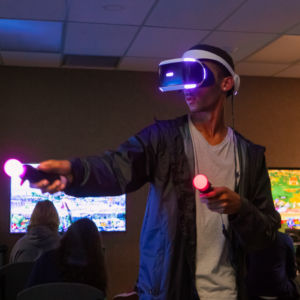 This presentation will give an overview of the maintenance and management of the UNT Media Library’s video game collection and gaming spaces. Join Diane Robson and Emily Pojman as they discuss collection maintenance and space management topics such as circulation, reservations, problem troubleshooting and ticketing, and handling disruptive students.
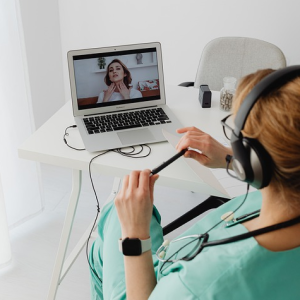 The Bureau of Labor Statistics projects that the employment of social workers will grow 12% from 2020 to 2030 to meet an increase in demand. Further, with the growth of telehealth and telemedicine visits continuing beyond the COVID-19 pandemic, individuals are finding more ways to reach their healthcare providers. However, in rural areas, finding local providers and reliable Internet access can create a barrier to access. As public libraries have long been viewed as the central hub for information, gatherings, and broadband service, their pivot to serve as a place for patrons to meet virtually with social workers comes at an opportune time. This presentation will show how three public libraries developed a pilot program – titled “Because You Matter” – with the Indiana University School of Social Work to coordinate weekly telehealth visits with social work students and library patrons. They’ll share successes, failures, and what they learned to improve the program in the future.
  It’s a daunting tasks for librarians to consider how best to welcome visually impaired patrons into their libraries. However, with a better understanding of what vision loss is, you can make quick, easy, and inexpensive changes to your library that will open the doors more fully to those with vision loss. Learn more about vision loss and how to quickly and easily change your flyers and presentations, physical space, technology, and signage to be more accessible.
 This session will include a demonstration of Canva, the web-based graphic design and publishing tool. Learn tips and tricks that will help you do more with Canva and help you create graphics that capture the attention of your audience. Questions submitted before the webinar will help guide the presentation.
 Board games are fun for children of all ages, but they are also promising tools for education. How can we best practically incorporate them into K-12 classrooms in order to optimize learning? As a former neurobiologist who transitioned to teaching, I have experimented for the past seven years with the integration of board games as educational tools. Here I will discuss best practices for using board games effectively to teach content knowledge, focusing primarily on science, technology, engineering, and mathematics (STEM) subjects. Topics covered will include gamer motivations, fun yet educational game mechanics, lesson plan structures, roles of educators in scaffolded learning, and common mistakes I have discovered in the “gameschooling” process. I will also show preliminary evidence that board games can effectively improve content knowledge. Overall, I hope to show how popular modern board games could be utilized in educational arenas.
 Keeping up with our busy work and personal lives can be a challenge! Technology exists to help make it a little easier, but how do you decide what to use?
 Concerned about climate change? Help your library “go green” by leveraging the super power of libraries everywhere: the make-do mindset! You’ll learn solutions for everything from sustainable programming practices, environmental partnerships, as well as easy eco-friendly swaps, based on the experience of the Eureka Springs Carnegie Library.