Financial fraud and exploitation results in the loss of billions of dollars every year. These crimes often go unreported because victims are scared, embarrassed, or don’t know who to call. The U.S. Department of Justice National Elder Fraud Hotline, managed by the Office for Victims of Crime, provides services to adults aged 60 and older who experience financial fraud and exploitation to help them report the crime and access appropriate resources. In addition to the financial impact of these crimes, the emotional toll older adult victims of fraud suffer can be devastating. Professionals that interact frequently with older adults can play a critical role in identifying potential frauds and scams and utilize the opportunity to raise awareness of and share resources that may be available to assist victims of financial fraud, such as the NEFH. This presentation will cover some common scams, warning signs to look for, available resources, and steps to take should one suspect a fraud or scam is taking place.
Date: 07/31/2024
Format: Archived YouTube Video
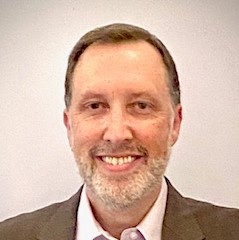
Presenter: Helen Supanich, Department of Justice’s National Elder Fraud Hotline
Ms. Supanich has ten years’ experience providing services to older adults. She is currently a Case Management Shift Supervisor for the Department of Justice’s National Elder Fraud Hotline. Previously, Ms. Supanich worked as an Advocate for the VOCA-funded Holistic Elder Abuse Response Team (“HEART”) at the non-profit WISE & Healthy Aging, where she partnered with Adult Protective Services and Long Beach Police Department; she provided case management and advocacy services to older/dependent adult abuse survivors. Prior to this, Ms. Supanich was an Ombudsman with the Long-Term Care Ombudsman Program in Los Angeles County (Region II), where she investigated abuse, neglect, and other issues at long-term care facilities in her assigned region and served as an advocate for residents at these facilities.


Embracing the old saying “the more you know, the more you grow” holds true for Libraries, but with just a little adjusting, “the more you are known, the more you’ll grow.” Expanding outreach allows the community to know and acknowledge the Library as a thriving community service. Using this idea the Floyd County Library Director Melissa Merida will share their library’s expansion of services over the last 5 years through creating unique service locations including an art museum, a digital library branch, and a satellite library in a local college library. Their approach through a low cost commitment to deliver creative outreach points of service without a bookmobile will be highlighted and tools for successful events will be shared . “Our growth in branches, funding and services is not due to any one thing, it is due to staff being committed to dream big and finding a way to say “yes” to community events and partnerships.” Allowing people to SEE the Library in new and unique ways that has people asking for library locations in their neighborhoods. The ideas that will be shared can be duplicated or may inspire your own creativity.
Libraries give their communities access to amazing online resources with enormous potential to improve lives and build skills, but these databases and digital courses are a challenge to promote and often underutilized. The St. Joe County Public Library has had success with Bendable, a life long learning platform that pairs online learning with in person connections. Community engagement and outreach are at the heart of our strategy, and we work directly with community members, organizations, and businesses to curate learning opportunities. These strategies focus on workforce development and partner networks. This webinar will provide an introduction to Bendable and also explore strategies for learning-centered engagement and outreach that can be implemented by any library.
Our LGBTQIA+ youth are increasingly under attack and subjected to constant bullying. Participants will learn how to easily identify themselves as an ally: a port in the storm. Participants will also receive resources and advice on how to navigate the troubled waters with these formative young people. Questions were submitted in advance for this webinar and the presenter guided participants through best practices for a variety of scenarios.
The staff of the North Manchester Public Library strive to meet the needs of their community in a variety of innovative ways. Unique programs and resources strengthen community relationships, center the library as an integral part of community life, and undergird literacy. In this webinar, Sarah Morbitzer, Children’s Department head, will share the ways NMPL is working to promote food security, physical activity, sensory integration, accessibility, and curiosity in learning.
The Bureau of Labor Statistics projects that the employment of social workers will grow 12% from 2020 to 2030 to meet an increase in demand. Further, with the growth of telehealth and telemedicine visits continuing beyond the COVID-19 pandemic, individuals are finding more ways to reach their healthcare providers. However, in rural areas, finding local providers and reliable Internet access can create a barrier to access. As public libraries have long been viewed as the central hub for information, gatherings, and broadband service, their pivot to serve as a place for patrons to meet virtually with social workers comes at an opportune time. This presentation will show how three public libraries developed a pilot program – titled “Because You Matter” – with the Indiana University School of Social Work to coordinate weekly telehealth visits with social work students and library patrons. They’ll share successes, failures, and what they learned to improve the program in the future.